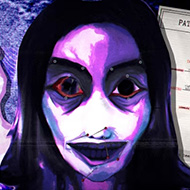
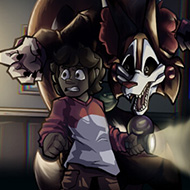
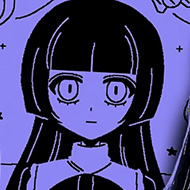
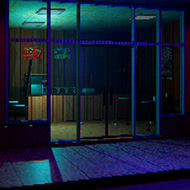
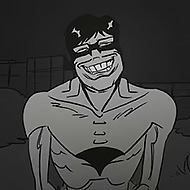
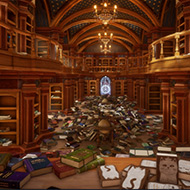
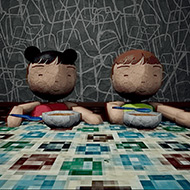
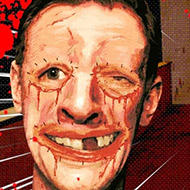
What is it about a hand-drawn point-and-click city that makes an empty street feel more unsettling than a jump scare would? Smile More leans entirely on that question, dropping you into a quiet, illustrated city and letting the stillness of it do the unsettling work instead of throwing anything directly at you.
Exploring the City in Smile More
The format is classic point-and-click: click to move between screens, click on objects and people to interact, and piece together what’s actually going on in this city one scene at a time. There’s no combat and no fail state driven by reflexes — the pressure, such as it is, comes from curiosity and a slowly building sense that something about this place isn’t right, rather than from any timer or chase sequence.
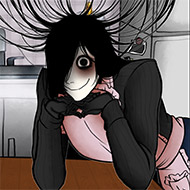
The hand-drawn presentation matters more than it might seem to at first glance. A city rendered this way reads as familiar and a little worn, which makes the moments where something is subtly off — a detail in a background, an interaction that doesn’t resolve the way you’d expect — land harder than they would in a more polished, modern art style.
Fans of slower, exploration-driven point-and-click games will recognize the pacing immediately; this isn’t built for players looking for constant stimulation, it’s built for players willing to click around, read the room, and let a mystery unfold at its own speed.
What Beginners Rush Past in Smile More
The most common mistake with a game like Smile More is rushing through screens looking for “the objective” the way you would in a more conventional adventure game. Point-and-click games built around atmosphere often hide their best moments in optional interactions — clicking on things that don’t obviously matter — and skipping past them in search of a clear goal means missing most of what the game is actually offering.
The second mistake is assuming every unsettling detail is meant to be solved or explained. Games in this style, including Smile More, often lean on ambiguity as a deliberate choice rather than a puzzle waiting for a definitive answer, and players hunting for a tidy resolution can end up more frustrated than they need to be.
There isn’t much publicly documented about Smile More’s specific story beats, character names, or ending count, and that’s worth being upfront about rather than guessing — what can be said honestly is the format (point-and-click, hand-drawn, atmosphere-first) and the pacing (slow, exploration-driven), without inventing plot details the source material doesn’t actually confirm.
Why the Pacing Divides Players
Reactions to slow, atmosphere-first point-and-click games like this tend to split cleanly. Players who enjoy games that trust silence and empty space to do the work often rate this style highly, while players expecting a clearer throughline or faster pacing understandably find it thin. Both reactions make sense given how deliberately restrained this kind of game usually is with its scares and its explanations.
If you’re wondering whether Smile More has jump scares, the honest answer based on its format is that it’s built around atmosphere and slow-burn unease rather than sudden shocks, which is typical of hand-drawn point-and-click horror in this style. If you’re wondering how long a playthrough takes, that depends heavily on how much of the optional clicking and exploring you do — rushing the main screens will always be faster than actually investigating everything a scene offers, and with a game like this, investigating is usually the point.
Smile More isn’t trying to be a long game or a mechanically deep one — it’s a short, quiet walk through a city that keeps almost, but not quite, showing you why it feels wrong. That restraint is either exactly what you’re looking for in a point-and-click or a little too subtle for your taste, and either reaction is a reasonable one to have.