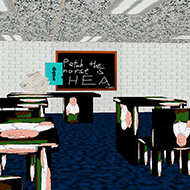
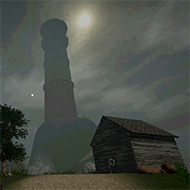
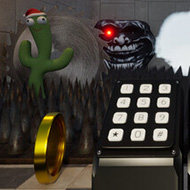
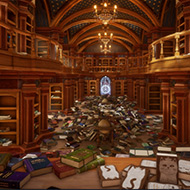
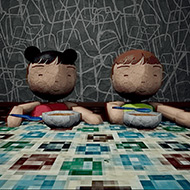
In Miller’s Fantasy: PARTY you start in one room with one set of rules, and by the time you’ve pushed through to the next area those rules have already changed underneath you — different visuals, a different pace, a different kind of challenge, all stitched into what’s technically still the same single run.
How Miller’s Fantasy: PARTY Keeps Changing Shape
The defining trick of Miller’s Fantasy: PARTY, which runs on the technical title Stasis behind the scenes, is that it doesn’t commit to one genre for the whole experience. Instead, the game shifts its visual style and its core mechanics depending on which “world” or room you’ve entered, borrowing recognizable shapes from other well-known genres and game styles without ever staying in one of them long enough to become a straightforward clone of anything specific.
That constant reinvention is the whole appeal. Rather than mastering one system across an entire playthrough, you’re re-learning the rules every time the environment shifts, which keeps the pacing unpredictable in a way a single-genre game usually can’t match.
Player discussion around the game consistently circles back to this shape-shifting structure as both its strongest hook and its biggest barrier to entry — it’s memorable specifically because you can’t settle into a rhythm, which is either thrilling or exhausting depending on how much you enjoy constantly adapting.
Habits That Fail Between Shifts
Assuming skills carry over between rooms. The instinct that works perfectly in one segment can be actively counterproductive in the next, since each shift changes not just the visuals but the actual rules you’re operating under — timing that mattered a moment ago might not matter at all in the next room, or a totally different kind of timing might suddenly be the whole challenge.
The second common mistake is rushing into a new room the instant it loads, before getting any read on what’s changed. Because the mechanics reset with each transition, a few seconds spent observing before acting tends to save far more time than charging in on autopilot and getting caught by a rule you haven’t identified yet.
How the Experience Escalates
Early transitions tend to be gentler shifts — a change in pace or perspective rather than a full mechanical overhaul — which gives you room to notice the pattern of “things change here” without being punished too harshly for adjusting slowly. By the time you’re several rooms deep, the shifts get more aggressive and less telegraphed, and recognizing the moment a new rule set has taken over becomes the actual skill being tested.
What players tend to debate most is whether this structure holds together as a cohesive whole or reads more like a tech demo stringing genre references together without a strong connective thread. Both readings are fair — the shifting-genre gimmick is genuinely inventive, but it also means Miller’s Fantasy: PARTY never lets any single system breathe long enough to be mastered the way a dedicated genre game would allow.
Questions Players Ask About Miller’s Fantasy: PARTY
Does Miller’s Fantasy: PARTY have one consistent genre?
No — that’s the point of the design. Each room or section can shift the visual style and mechanics enough that treating it as any single genre undersells how much it changes across a run.
Do earlier rooms ever repeat later in a run?
The structure is built around moving forward through new shifts rather than cycling back through earlier ones, which keeps the sense of constant reinvention intact from start to finish.
Is there a way to prepare for what a room will demand before entering it?
Not reliably — part of the design is that the shift isn’t telegraphed in advance, which means adapting quickly after a transition matters more than trying to predict it beforehand.
What makes Miller’s Fantasy: PARTY worth finishing isn’t any single room — it’s watching the whole run add up into a genuinely strange patchwork of genres that shouldn’t fit together as cleanly as they do. By the final shift, you’ve effectively played several different small games stitched into one continuous session, and that novelty is worth more here than in almost anything built around a single, stable mechanic.