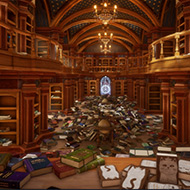
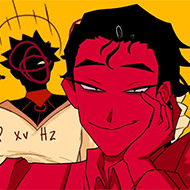
Re:Metamorphosis Candina looks, from the thumbnail, like it might be a moody visual novel about transformation and identity. Load it up and it’s something else entirely — a third-person puzzle-platformer about a curse investigator picking through haunted ruins with a winged companion at his side, which is a genuinely large gap between what the title promises and what the game actually delivers.
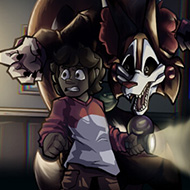
Farold Roberts and Atzalar in Re:Metamorphosis Candina
The game casts you as Farold Roberts, a curse investigator whose job is exactly what it sounds like — tracking down supernatural cases across cursed ruins, dark mountains, and haunted forests, solving the puzzles each location hides along the way. He isn’t alone in this: Atzalar, his winged companion, travels with him, and the two together give the game a recognizable pair of leads rather than a silent, unnamed protagonist wandering an empty map.
Mechanically, this sits closer to a puzzle-platformer than a traditional point-and-click adventure, even though the eerie, mystery-driven atmosphere borrows heavily from that older genre. You’re navigating physical space — platforming across ruins, working through environmental puzzles — rather than clicking through static scenes, which gives the game a more hands-on rhythm than its moody art style might suggest at first glance.
As an entry in an episodic series built around Farold’s investigations, Re:Metamorphosis Candina carries over the recurring shape of the format: a new cursed location, a new mystery tied to it, and puzzles specific to that setting’s hazards and layout.
What New Players Misjudge About the Pacing
Players expecting a slower, click-to-progress adventure tend to misjudge the pacing early, since the platforming sections demand actual timing and spatial awareness rather than patient observation. Treating environmental hazards as background dressing instead of active obstacles is the fastest way to lose progress in a level built around cursed ruins and dark, unstable terrain.
The second common mistake is ignoring Atzalar’s role in traversal and puzzle-solving. A companion built into the core loop like this usually isn’t just cosmetic, and players who forget to use what Atzalar offers tend to hit puzzles that feel unsolvable simply because they’re trying to solve them with only half the available tools.
How the Puzzles Escalate Through the Ruins
Early sections of Re:Metamorphosis Candina tend to establish the core mechanics gently, letting you get comfortable with how Farold moves and how Atzalar factors into traversal before layering in real hazards. By the time you’re deeper into the cursed ruins, puzzles start combining platforming precision with the kind of environmental logic that made earlier entries in this series — with their haunted forests and dark, factory-like interiors — stand out from more straightforward platformers.
Series fans tend to point to the atmosphere as the throughline that holds every entry together, even as specific mechanics shift between installments. That consistency of mood, more than any single mechanic, is what the community generally agrees is the series’ strongest asset.
Questions About Farold’s Journey in Re:Metamorphosis Candina
Do you need to have played earlier entries to understand Re:Metamorphosis Candina?
Not strictly — each entry in the series is built around its own self-contained mystery and location, though returning players will recognize Farold Roberts and Atzalar’s established dynamic from earlier cases.
Is Re:Metamorphosis Candina more puzzle-focused or platforming-focused?
It leans on both simultaneously — puzzles are frequently embedded in the platforming itself, meaning solving a room’s mystery and physically navigating it are rarely separate tasks.
What role does Atzalar actually play in gameplay?
Atzalar factors into traversal and puzzle-solving alongside Farold, making the pair a functional duo rather than Farold simply being accompanied by a background character.
By the time Re:Metamorphosis Candina’s central mystery resolves, what sticks isn’t the title’s misleading first impression — it’s Farold Roberts working through one more cursed location with Atzalar, the same investigative rhythm the series keeps returning to, applied here to a setting eerie enough to justify one more entry in an already unsettling catalog of cases.