What happens the moment you press a button in Fall Again without knowing what it actually connects to? Sometimes a door opens somewhere across the facility. Sometimes a trap triggers instead. Sometimes the whole room quietly rearranges itself, and you don’t find out which one happened until you’ve already moved on to the next puzzle.
| Genre |
Psychological horror puzzle |
| Perspective |
First-person |
| Core Challenge |
Escape a facility using interconnected button-and-switch systems |
Waking Up in Fall Again
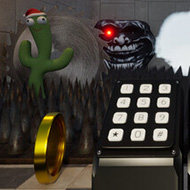
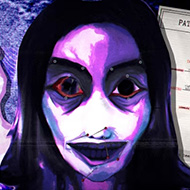
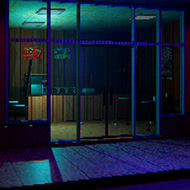
You start locked in a room that shouldn’t feel as wrong as it does — mannequins standing where furniture should be, ordinary objects arranged just slightly off, and a scatter of buttons whose purpose isn’t explained anywhere. From there, Fall Again builds its entire structure around one core idea: buttons, switches, and mechanical systems that are connected to each other in ways you have to work out through trial, observation, and memory rather than any in-game tutorial.
The facility isn’t one big room, either — it’s a series of interconnected spaces, and a button pressed in one location can open a door, disable a pathway, or trigger something considerably less helpful somewhere else entirely. That disconnect between cause and visible effect is the puzzle engine driving the whole game, and it’s also where most of the psychological horror comes from: you’re never fully sure what a given action actually does until the consequence shows up somewhere you weren’t looking.
Puzzle fans who enjoy games built on delayed feedback and careful backtracking will find a lot to like here, since Fall Again rewards patience and note-taking over fast, reflexive experimentation.
Mistakes That Cost You the Most
The most common mistake is pressing buttons impulsively to see what happens, without tracking which button was pressed where or what changed afterward. Because effects are often delayed or physically distant from their cause, a button pressed without any record of it is a lead you’ll likely lose track of by the time its consequence actually matters.
The second mistake is treating every button as safe to test. Some genuinely do trigger traps or close off pathways rather than opening them, and beginners who assume every unexplained mechanism is a helpful one tend to box themselves into dead ends they then have to work backward out of.
How the Facility’s Puzzles Escalate
Early rooms tend to keep the cause-and-effect chains fairly short — a button and a door in roughly the same space, easy enough to connect without much effort. As you move deeper into the facility, those chains stretch out across multiple rooms, and by the time you’re several sections in, solving a single puzzle can mean recalling a detail from a room you passed through several minutes earlier.
That escalating distance between cause and effect is deliberate, and it’s what separates Fall Again from a simpler switch-and-door puzzle game — the facility is designed to make you doubt your own memory of what you’ve already done, which is as much a psychological pressure as it is a mechanical one.
What Fall Again Does Well and Where It Divides Players
The delayed-consequence structure is exactly what fans of this style of horror-puzzle game point to as the strongest part of Fall Again — it creates genuine uncertainty without relying on jump scares to generate tension. Critics of the same system argue it can tip into frustration when a distant consequence is genuinely hard to trace back to its cause, turning a puzzle into guesswork rather than deduction.
Wondering whether Fall Again has a fixed solution path or lets you approach rooms in different orders is a fair question, and the honest answer is that the facility’s interconnected design generally allows some flexibility in order, though certain mechanisms clearly gate access to specific later areas. Wondering how long a full escape takes similarly depends on how carefully you track button effects — meticulous players tend to move slower but backtrack far less than players who press first and think later.
By the time you find the way out of Fall Again’s facility, the mannequins, the mismatched furniture, and the buttons that never explained themselves stop feeling random and start reading as a system you actually learned, room by room, mistake by mistake. That earned understanding is the whole reward the game is built to offer, and it’s a satisfying one if you’re willing to let the facility teach you slowly instead of rushing it.