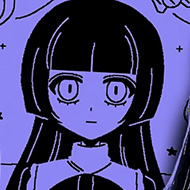
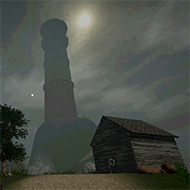
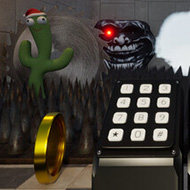
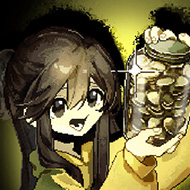
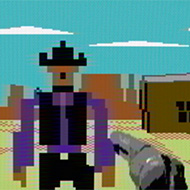
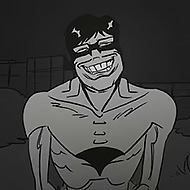
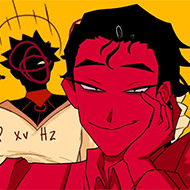
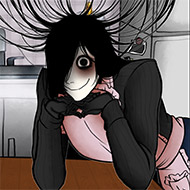
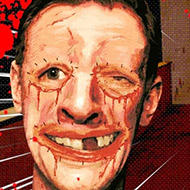
What actually gives away a skinwalker in Arcadia Cafe before it’s too late? Not the face — the face is always right. It’s the pause before an answer, a detail about the neighborhood that doesn’t line up, or a customer who orders exactly what the last customer ordered, word for word, like they’re reading from a script nobody wrote for them.
| Genre |
First-person horror simulation |
| Perspective |
First-person, single location |
| Structure |
Night shift, multiple endings |
Working the Counter in Arcadia Cafe
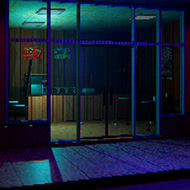
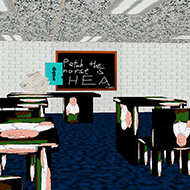
The setup is deceptively small: one counter, one door, a slow trickle of customers, and a shift that has to be gotten through. Arcadia Cafe drops the job-sim formula onto something much darker — somewhere out there, something has started copying the regulars, and it’s your job to keep the counter running while quietly figuring out who’s still a person and who isn’t anymore.
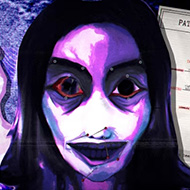
The horror here isn’t jump-scare horror, it’s attention horror. Every customer who walks through the door gets a full interaction — ordering, small talk, sometimes a direct question — and the game expects you to actually listen rather than pattern-match on appearance alone. A skinwalker doesn’t look wrong. It sounds wrong, eventually, if you’re paying attention.
That distinction is what makes the loop work. Players used to horror games built around avoiding a visible threat have to recalibrate here — the skinwalker is standing in front of you making pleasant conversation, and the game is quietly daring you to notice.
What New Players Miss About the Skinwalkers
The single biggest mistake beginners make in Arcadia Cafe is treating it like a spot-the-difference puzzle — scanning faces and outfits for something visibly off. The game punishes that instinct on purpose. Skinwalkers are built to pass a glance; they only slip up in conversation, in details about their own supposed life that don’t hold together under a second question.
The second mistake is going too fast. Rushing customers through to “get to the next one” is exactly how a skinwalker gets through the door unnoticed, because the tells are almost always buried in the second or third exchange, not the first. Slowing down costs shift time, and shift time is the actual resource being managed here, which creates a real tension between efficiency and safety.
Simulation fans who came in expecting a relaxing shift-work loop tend to be the ones caught most off guard, since the game spends its early minutes playing that expectation completely straight before letting the first real wrongness show through.
How the Shift Gets Harder
Early in a shift, customers are mostly what they appear to be, and the pace is gentle enough to learn the counter routine without much pressure. By the time the later customers start filing in, the ratio shifts, the conversational tells get subtler, and the cost of a wrong call — serving a skinwalker as if it were a regular, or turning away someone who was telling the truth — starts to matter more to how the night ends.
Multiple endings branch off the choices made across a full shift, which gives Arcadia Cafe replay value beyond figuring out the mechanics once. Players comparing notes tend to focus on which small interactions actually mattered versus which ones were flavor, and that ambiguity is deliberate.
Answering Player Questions About Arcadia Cafe
Can you fail a shift in Arcadia Cafe just by serving the wrong customer?
Serving a skinwalker without noticing doesn’t always end the shift outright, but it does affect which ending you land on, since the game is tracking your judgment calls across the whole night rather than punishing a single mistake in isolation.
Is there combat if you confront a skinwalker directly?
No — the tension comes from observation and conversation rather than any kind of physical confrontation, which is part of why the game reads as simulation-horror rather than a survival shooter.
Do the skinwalkers ever look physically different from real customers?
Rarely, and that’s the point — leaning on appearance alone is the fastest way to misjudge someone, since the game reserves its real tells for what customers say, not how they look.
By the end of a full shift in Arcadia Cafe, the counter starts to feel less like a workplace and more like an interrogation room you’re not allowed to admit you’re running. The skinwalkers never announce themselves, the game never highlights the correct read, and that refusal to hold your hand is exactly why a clean shift, with every regular still a regular by closing time, feels like something you earned rather than something the game handed you.