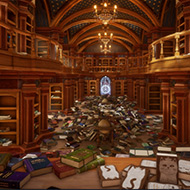
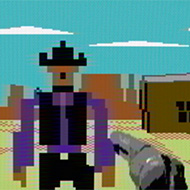
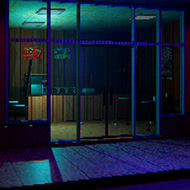
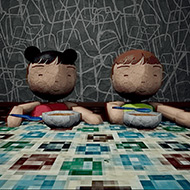
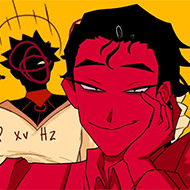
Librarian: Tidy Up The Arcane Library! looks like tidy, cozy shelf-organizing from its own title, but the game underneath that name is something much stranger and much more unsettling: a short point-and-click investigation where you’re not sorting books at all, you’re piecing together how a man named Richard Green actually died. There’s no dialogue tree to guide you and no obvious tutorial — you’re simply handed a scene and a pencil, and the truth only comes out if you draw it correctly.
| Genre |
Point-and-click investigation |
| Setting |
Early 20th century |
| Session length |
Roughly 5–10 minutes per playthrough |
| Platform |
Browser |
You take on the role of an unnamed investigator combing through the aftermath of Richard Green’s death — a veteran, a father, a husband, all three identities layered into a single case file that the game slowly unpacks rather than dumping on you up front. What makes Librarian: Tidy Up The Arcane Library! stand apart from a typical hidden-object mystery is the drawing mechanic sitting at its center: this isn’t drawing for its own sake, it’s drawing as the actual method of investigation.
The Drawing Mechanic That Defines Librarian: Tidy Up The Arcane Library!
When you come across a piece of physical evidence — a gun, a length of rope, some object that doesn’t belong where you found it — the game doesn’t just let you click it and move on. You’re handed a pencil tool and asked to recreate the object’s correct position and shape yourself. Get the angle or placement wrong and the scene doesn’t click into place; get it right and a piece of the timeline locks in. It’s a small mechanical idea, but it changes the emotional register of the whole game: you’re not a passive observer clicking through a slideshow of clues, you’re the one physically reconstructing what happened, which makes every correct answer feel earned rather than handed to you.
That drawing requirement also slows the pace in a way that suits the subject matter. A death investigation told entirely through clicking would move fast and feel disposable; forcing you to actually draw each piece of evidence back into place gives the game room to make each discovery land instead of blurring into the next one.
Suicide Notes, Diaries, and the Words You Have to Fill In
Beyond physical evidence, Librarian: Tidy Up The Arcane Library! leans on fragments of writing — a suicide note, pages from a diary, pieces of overheard or remembered conversation — and instead of just reading them to you, the game blanks out key words and has you fill them in based on context you’ve already gathered elsewhere in the case. It’s a quiet but effective way of testing whether you’ve actually been paying attention to the details rather than just clicking through them, and it ties the writing itself into the same “you have to reconstruct it, not just observe it” philosophy as the drawing mechanic.
This is also where the emotional weight of the story really surfaces. Richard Green isn’t presented as a puzzle box with no interior life — the notes and diary fragments you piece together sketch out a father and husband under pressure, and the game trusts you to draw your own conclusions about what actually happened rather than spelling it out in a closing cutscene.
A Short Story Told at the Right Length
Librarian: Tidy Up The Arcane Library! doesn’t overstay its welcome — a full playthrough runs somewhere around five to ten minutes, which is short enough to replay but long enough that the investigation doesn’t feel rushed. That runtime is a deliberate fit for the format: a longer game built around the same drawing-and-fill-in-the-blank mechanics would risk the novelty wearing thin, while a shorter one wouldn’t have room to build up Richard Green’s story with any real weight.
Players who go in expecting a long-form mystery sometimes come away surprised at how quickly it wraps up, but the compact runtime is part of what makes the game land — every clue you draw feels necessary rather than padded out to stretch playtime.
Hand-Drawn Presentation and Tone
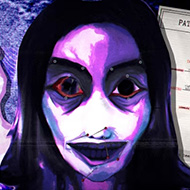
The visual style leans into rough, hand-sketched linework rather than polished illustration, which reinforces the idea that you’re looking at a case being pieced together in real time rather than a finished, pre-rendered scene. It’s an eerie, slightly unfinished look that suits a story about reconstructing a death from incomplete fragments.
Common Reactions to Librarian: Tidy Up The Arcane Library!
Community reaction has generally been positive, with players specifically calling out the drawing mechanic as the thing that separates this from more generic point-and-click mystery games. The core criticism that does come up is the flip side of its short runtime — some players wanted more cases, more evidence to draw, simply because the format works and they wanted more of it.
- Do you need to be good at drawing to play Librarian: Tidy Up The Arcane Library!? No — the drawing tool asks you to recreate rough positions and shapes based on the clues you’ve already found, not to produce polished art. Precision of observation matters more than artistic skill.
- How long does a full case take in Librarian: Tidy Up The Arcane Library!? A single playthrough runs roughly five to ten minutes, covering the investigation into Richard Green’s death from first clue to final piece of the timeline.
- What kind of evidence do you actually interact with? Physical objects like a gun and rope that you redraw into their correct position, plus written fragments — a suicide note, diary pages, remembered conversation — where you fill in missing words using context from other clues.
By the time the last fragment of Richard Green’s diary clicks into place, Librarian: Tidy Up The Arcane Library! has quietly turned a joke of a title into one of the more affecting short mystery games you can find in a browser tab — proof that a five-minute investigation, built on nothing more than a pencil and a few scattered clues, can still leave you thinking about a rope and a half-finished sentence long after the case closes.